Sunday, 8 January 2017

Wrapping things up

Well, dear readers, this is it. The project is drawing to a close. The deadline’s coming up, and it’s time for me to cease my informative ramblings and bid thee farewell. It’s been an interesting experience; I’ve done some blogging before, but not of the academic variety. One of the big things that I’ve noticed in the last few months is how I’ve become constantly on the look-out for interesting videos, articles, and other media which I could share here. My facebook saved links log has grown exponentially. But I’ve also experienced the benefit of researching and learning about something that I am interested in; something I care about. I worked on a related topic for my undergraduate dissertation, and that was something I was very passionate about, but it was very focussed; this has given me the opportunity to investigate a broader topic, drawing threads from across biology, geography, engineering, and agricultural sciences to create a picture that I hope isn’t too bad to look at.

 What have I learned? What have I gained? Well, I’ve deepened my knowledge of the interactions between the agricultural system and humans; the supply and demand tug-of-war that can change lives and livelihoods at the drop of a viral post. I’ve learned about some pretty cool sustainable practices being developed and put into effect; the farm in Australia growing tomatoes with only seawater and sunlight, and the cows being fed seaweed to decrease their methane emissions. I’ve also had a chance to revisit Malthus, something I haven’t studied since my GCSEs, and my dear vegetarianism-emissions topic.

 I've also found my writing changing; the way I choose to interact with readers through my style. As someone who loves writing, this has been a growing experience not just for my scientific knowledge but for my other skills as well. I hope that my style has been enjoyable for you; I've enjoyed developing it further, and having the chance to write science in a more casual way - something I don't get to do so often.

 Mostly, though, I’ve been reminded how fragile our agricultural system is; how far we’re pushing ourselves towards an agrapocalypse through our own wastefulness, thoughtlessness, and greediness. It sounds harsh, but when it comes to climate change and environmental detriment, you kind of have to be. We could be feeding everyone on Earth, but instead people are hungry and landfills of food are thrown away every year. We could be living with a sustainable, environmentally friendly agricultural system; instead we increase our emissions and land use by producing vast amounts of meat, cutting down forest for ranches and monoculture. We could be solving issues of low yield, drought, or food insecurity with scientific advancements both genetic and mechanical. But we’re afraid, so we stick with the industry we know.

There are solutions. There are policies that could be implemented; things that could make a real, tangible difference. But if you’re looking for a way to make your diet eco-friendly, here are some points I’ve gathered during this project:
·         Decrease the amount of meat you eat. You don’t have to go veggie, but you can cut down on animal products and that really will make a big difference to your carbon footprint.
·         Shop ethically. Research what you’re buying, find food that’s produced in sustainable ways, support farms that use sustainable practices, even fund kickstarters that you think might be making a difference on the road to sustainable agriculture. And don’t just jump on the next food fad that blows across your newsfeed. That’s how you end up with bags of unused millet sitting in your kitchen cupboard.
·         Waste less. Only buy what you need. Buy things at the end of the day when they’re about to be thrown away; they’re still good, and they’re cheaper anyway. Two birds, one stone.
·         Keep informed. About policies, about developments, about the real impacts of that new ‘superfood’. Be that person who knows stuff.

But one of the most important things, something I fully believe in, is to vote. Make your voice heard; let your government know your opinions. If Italy can have a vegan city and France can ban food waste, we can make a difference all over the world. It’s cheesy and cringey, but it’s true.


 I have some hope for us. The agrapocalypse may be coming – for the people living in food insecurity, it may feel as if it’s already here – but we have the ability to counteract it. The agricultural system is complex, and full of difficulties, but there are solutions in there too. Maybe we’ll find them.

Friday, 6 January 2017

A New Green Revolution?


The Green Revolution was a period over the mid-20th century when new agricultural technologies and practices were being developed, allowing for greater production, especially in the developing world. One of the important new technologies to come out of the Revolution was GMOs; high-yield crops, which I have discussed previously on this blog – this facet of the movement is sometimes referred to as the Gene Revolution. The Revolution increased agricultural production around the world, saving many from starvation. But now, once again, there are food shortages in many parts of the world; over a billion people live in food insecurity, while 45% of our land is used to produce food. So, are we in need of a new Green Revolution?

 The combined impacts of climate change and population increase have meant difficulties for agriculture; land is deforested to make room for crops to feed the billions of humans, which leads to higher emissions, while changes in temperature and weather make it harder to grow the crops in the first place. Water scarcity and lack of land, combined with the emissions of agricultural practices, mean that our food systems are unsustainable (De Schutter et al, 2011), and detrimental to the environment. Sooner or later, we are going to need new practices if we want to keep the world fed.


 Some things are obvious; high-yield crops, requiring less input for more output. Other things are obvious but less appealing to many – like vegetarianism and veganism. But, like the first Green Revolution, what is needed is developments in sustainable agriculture. The major challenges will be are soil degradation, land space, and water scarcity, as well as the need for crops specialised to the new environments we are creating with climate change (Den Herber et al, 2010). Innovations like Sundrop Farm’s solar and seawater tomatoes are a step in the right direction, using sustainable resources to produce food with little to no energy usage, and it is important that such developments are encouraged. But can we find new ways to sustainably produce enough food on a global scale?


 I’ve talked about a lot of the possibilities over the last few months; the ways that agriculture fails, and the methods being looked into on how to develop past the current, unsustainable practices. The future of agriculture is now in the hands of scientists; developing new ways to produce sufficient crops to feed the global population in a sustainable way is no mean feat, however. There is no guarantee that we will be able to avert an agrapocalypse; either a result of insufficient food leading to widespread starvation, or unsustainable practices in conjunction with wider climate change.

Leaf Republic: eco-friendly plates

Tying in with tackling deforestation; biodegradable leaf plates! I think this is pretty cool. And, cue the dramatic music...


Source: Leaf Republic, .Leaf plates courtesy of nature, 2016.

Wednesday, 4 January 2017

Deforestation (Run, Forest, run!)


A fair point.


Deforestation. Not a word with positive connotations, is it? Don’t worry; I am definitely not here to change that. But I am here to inform you a bit more about it, because I’m fun like that. People talk about the Amazon a lot. It’s like the polar bear of ecosystems; big and exciting, and everyone knows that we need to save it. It’s the one you talk about because people have heard of it, and because you can put it on the front of a magazine and people will care. No one wants to hear about preserving peat bogs anymore than they want a big picture of a worm telling them it needs their help. People want pretty things like polar bears and enormous, mysterious forests to care about. In short, poster children.


Look at that vista; how can you not want to save it?


 And let’s be clear, the poster child of biomes is in trouble, but so are the Indonesian rainforests, and plenty of other ecosystems. There are forests all over the world; there used to be a lot more, in fact England was once covered in trees. Think of all those fairytales where people get lost in the woods; can you imagine managing that in the UK today? Walk in a straight line for an hour or two and you’ll find an A road. But time was you could wander for days without ever leaving the trees. We’ve lost a lot of that over the centuries, and now we’re doing the same to the rainforests of the world. We have many reasons, but one of the biggest ones is agriculture; in 2002, it was estimated that agriculture was the driver behind 96% of deforestation (Geist and Lambin, 2002).

 You’ve probably heard that palm oil is far from ecologically friendly, but do you know why? One word, dear readers; monoculture. From mono, meaning one; an area in which only one crop is cultivated. Swathes of Indonesian rainforest are cut down in favour on palm oil and other monoculture crops, resulting in enormous amounts of deforestation. And we don’t call the rainforests the lungs of the Earth for nothing; we need them. For air. That we breathe. But monoculture has another, sinister impact; it destroys the natural ecosystem. The habitat of a multitude of endangered species, being cut down for products you probably barely think about on a day-to-day basis. Go on, try to think of something you use palm oil for. I dare you. (Actually, it’s in half the stuff we use).


The same trees, as far as the eye can see.


 One of the big drivers of deforestation in favour of agriculture. Cash crops in Indonesia like palm oil, cocoa, and coffee became popular because of their monetary value; developing from relatively eco-friendly agroforests to all-encompassing monoculture in a period of only about three decades (Feintrenie et al, 2010). The fact of the matter is, most people want to increase their income; and they’re not willing to jeopardise that in the name of conservation. And, side note, can we blame them? It’s easy enough for those of us living in relative financial stability to look with scorn upon those who would squander this natural beauty in favour of cold hard cash, but when it’s a choice between deforestation or poverty, would any of us really choose differently? Too often, the poor pay the price for conservation sought by the rich (Martin et al, 2013).

  And what is the impact of all of this deforestation? We’ve all seen the pictures of sad orangutans looking lost and pathetic, as would you if someone had just replaced your home with a field of coconut trees, but the reality is an enormous loss of diversity from the rainforests we’re cutting down. Biodiversity isn’t just something that’s nice to look at; it’s important for the entire ecosystem that a balance is maintained, and a lot of the ecosystem services we rely on – air, pollination, and the like – rely themselves on some stability in the ecosystem (Memmott et al, 2007). Not only that, but monoculture results in a loss of genetic diversity in the area, which can cause problems for adaptation to the kinds of changes anthropogenic global warming is driving.


When will my forest return from the war?
But seriously, these guys are losing their habitat. It's not good.


 These large forests also do a lot to dampen the impacts of our greenhouse gas emissions; through 
photosynthesis, those enormous areas of trees take up tonnes of carbon dioxide on a daily basis, but when we chop them down that helping hand is cut away. A study in 2005 (Santilli et al) estimated that the annual tropical deforestation in Brazil and Indonesia would equal about 80% of the emissions supposed to be reduced under the Kyoto Protocol. Deforestation is thought to account for between 5-20% of global carbon emissions annually, with an area roughly the size of Egypt being cut down from 2000-2012 (Norris, 2016). More, in 2014 Arima et al found that enforcement of deforestation prevention in Brazil over 3 years avoided ~10,000km² of forest loss, as well as emissions of 1.23*10^-1Pg carbon.


 This is one of those facets of agriculture that seem irredeemable. The loss of so much natural beauty, so much diversity and, if you’re not swayed by any of that, the services we receive from these ecosystems is no small issue. But, until we can change policies to discourage expansion of agriculture into tropical forests, and find a way to enforce these policies effectively, there doesn’t seem to be much hope of change. It isn’t hopeless; Arima et al showed that with the benefits of good enforcement of forestry protection, but how can we protect the entirety of these enormous biomes? Is there a way to provide as much financial incentive to protect the forests as people receive to cut them down for farmland, without damaging economies? There doesn’t seem to be an easy solution, as always with the agricultural system.

Here's my beef


As someone who hasn't eaten meat for about seven years, the thought of a veggie-friendly but convincingly meaty burger is pretty exciting. And in terms of environmental friendliness, this is way better than actual meat. Take a look at the video, and read this article if you're interested in this kind of thing.


Source: Buzzfeed Video, Bleeding Vegan Burger, 2016.

Sunday, 1 January 2017

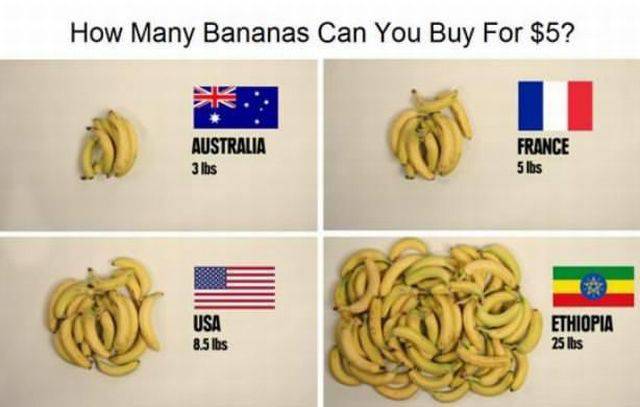
Bananagraphic


Happy new year! I had no idea what to do with this information, but then I thought; why not share it with my dear readers? Mull this over. While it's difficult to know how reliable the information is, it is an interesting figure.
Source: Simply Fantastic, Lesley Voth, 2016.

Monday, 26 December 2016

Merry Christmas!

Here's some food I won't be wasting! Homemade Finnish Korvapuusti. Half of them are already gone! I'd put up a picture of the meat-free lentil loaf I make for Christmas dinner (way better than it sounds), but it's mostly gone now. I'll be back with a longer post next week.

Source: Lucrezia Slinn, 2016.

Monday, 12 December 2016

An Article on Food Insecurity

Just an article on food insecurity in the UK from an MP. A reminder that, among all our overproduction, inefficiency, and wastage, hunger still exists even in what we might like to think of as the developed world.

People sorting at a food bank.

Thursday, 8 December 2016

Laudato Si'

A few weeks ago, I was at a conference on Laudato Si', which is an encyclical by Pope Francis about the issue of climate change. I was asked to write an article on the conference for my home diocesan magazine, the Portsmouth People. Although it's not directly related to agriculture and its role in the wider environment, it does illustrate how humans are now inextricable from the earth system, so I thought I would share it here. Click here and go to page 8 of the pdf for the published article, or here for a longer piece published as supplementary material on the magazine's website. Enjoy!

Wednesday, 7 December 2016

What's Your Beef? The Meat Industry and the Environment


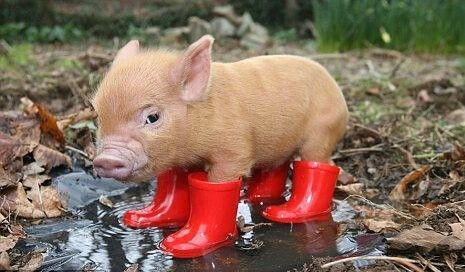
A very cute piglet.
Source: flickr user Vegan Feast Catering, piggy in wellies, 2010.

In the world of agriculture, one emitter stands head and shoulders above the others; meat. Now, I wrote my undergrad dissertation on a facet of this topic, and so in the interests of not plagiarising myself and also of just researching something else for a change, I’ve elected not to focus too closely on this particular issue; but it’s not one that I can ignore entirely, and with good reason. Part of that reason is that, as a vegetarian myself, I am inclined to feel somewhat smug about the whole ‘my carbon emissions are lower than your carbon emissions’ thing, but that smugness was not enough to get me through a 12,000 word dissertation on its own. The fact of the matter is, it’s a big issue. Setting aside the ethical arguments for and against meat – which, while close to my subjective heart, really have little to no place in science – the consumption of animal products, constantly growing with economic improvement, contributes hugely to the dietary greenhouse gas emissions of a large number of the human population, while the cultivation of livestock tends to result in huge swathes of deforestation (case in point: the Amazon).


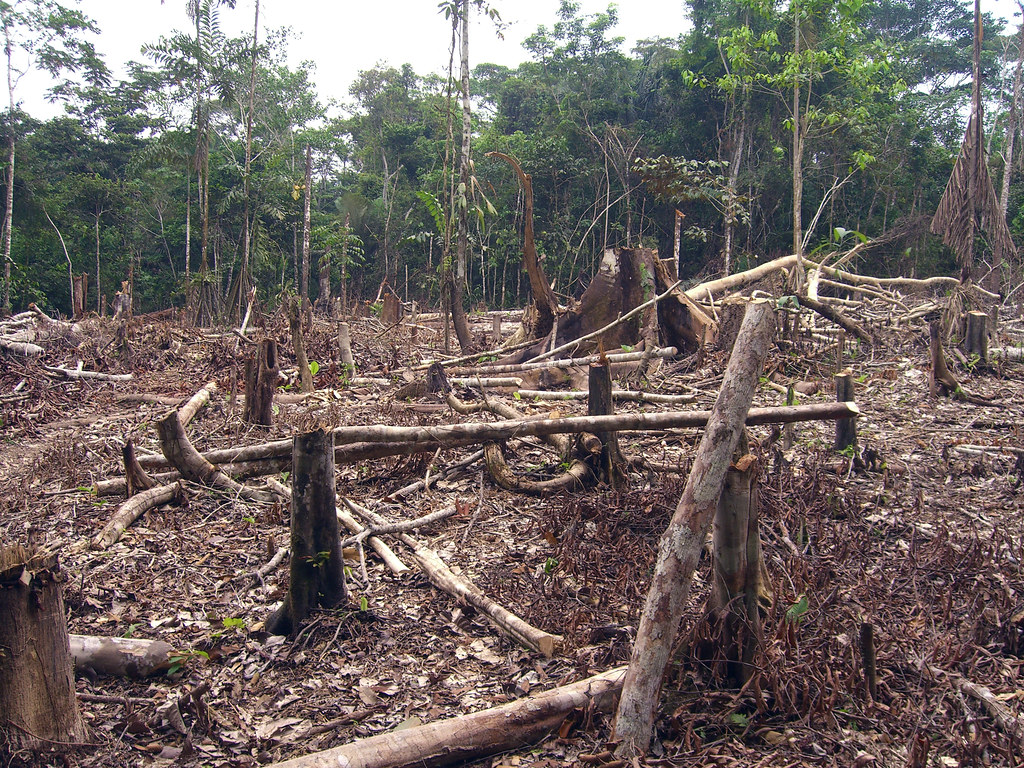
Deforestation in the Amazon
Source: flickr user Matt Zimmerman, slash and burn agriculture in the Amazon, 2007.

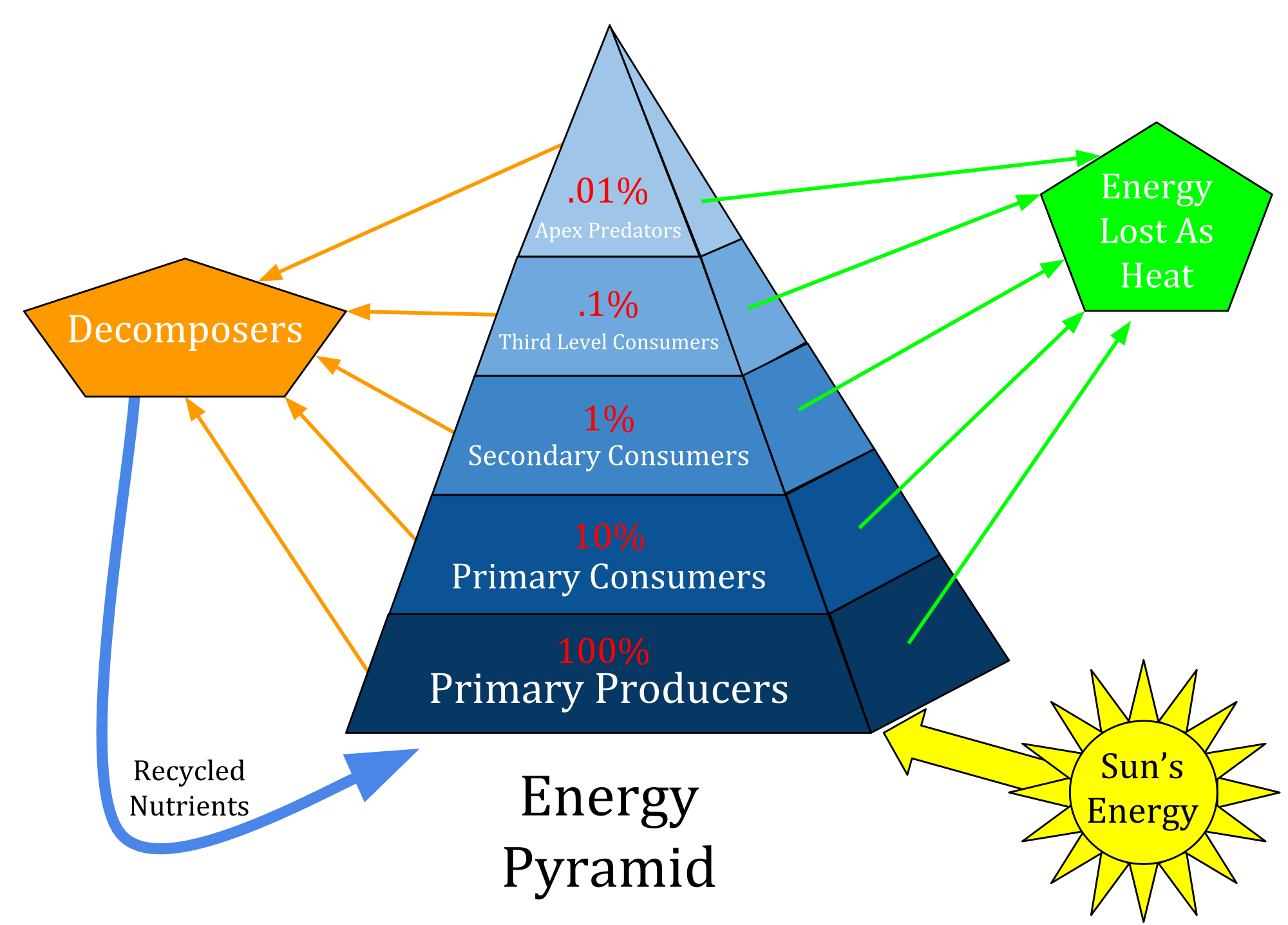
 It’s simple food chain dynamics, at its basic level; the higher up the chain you go, the more cumulative effort is being put in to get the energy attained from consuming another organism. Enormous amounts of grass or hay or soy have to go into feeding a cow every day for months or years, just to feed a human for one meal. One study (Cassidy et al, 2013) calculates that around 36% of crop calories produced by humans do not make it to a meal eat by a human. Which is not just inefficient; producing the food for your food requires energy, and land, and land use change. That production leads to the release of greenhouse gases, such as carbon dioxide and methane, into the atmosphere; and that’s something we generally view as bad. Not only this, but in order to produce all the food, and the food’s food, we have been cutting down our rainforests. I’m going to cover the effects of deforestation and monoculture on an ecosystem elsewhere, but suffice it to say that over the last 40 or so years, around 15-20% of the Amazon Rainforest has been deforested, much of it for use as land for cattle ranching. Trees take in carbon dioxide; the more we cut down, the fewer there are to mitigate our own emissions. So we’re really shooting ourselves in the foot with that one.


An example of an energy pyramid, showing
how less energy is available the higher you go.

 Now, I am not suggesting that the whole world goes vegetarian (though if we did, we’d have a lot more land free for important things like forests and orangutans) but honestly, just small changes can make a big difference. In the western world, we’ve grown accustomed to having relatively cheap meat easily available to us at all times, but this wasn’t always the way. The average amount of meat which makes up a diet in the west has increased significantly with the decrease in prices of animal products as intensive farming and long term storage became more and more popular (Hawkesworth et al, 2010). People used to live with a lot less of it, and they did pretty well. Actually, it’s healthier to cut back a bit.

There have been a few policies or movements, in the last few years, calling for a decrease in meat consumption. Pope Benedict XVI, in 2011, recommended that Catholics cease eating meat on Fridays; ‘fish Fridays’, as the practice has become known. This is more for a religious observance, but it’s still an easy way to cut back on meat. That one day a week adds up. The mayor of Turin, Italy, has announced plans to create the world’s first ‘meat-freecity’, with a vegan food festival, educational programmes about alternative diets in schools, and a meat free day every week, all to encourage people to consume less meat in the name of environmentalism. This mayor’s ambitious plans are not without push-back from a city with a rich culinary history, but from an environmental standpoint it’s a step in the right direction.

 I don’t want to come across as too preachy, so I won't go on too much. But the point is if you eat meat or other animal products then your dietary emissions are probably higher than someone who doesn’t, and that might be a problem.

If you're interested in transitioning to a meat-free, or just lower meat, diet then the Vegetarian Society has lots of useful information on how to do so healthily, and Happy Cow is really great for finding good veggie restaurants near you.

Wednesday, 30 November 2016

Sustain Ability

This week I want to shine a bit of light in the gloom I’ve been spouting, and talk about sustainable agricultural practices. Yes, I know that I’ve been going on about how our agricultural systems are enormous emitters and we’re all going to eat ourselves into an agrapocalypse of high emissions and vanishing rainforests, but there is some hope left out there! Humans don’t actually want to become extinct, so sometimes we do face our problems and work on solutions.

 When looking at news stories on breakthroughs in the field, it can be a little hard to sort the wheat from the chaff (agriculture joke for you there) but there have been a few recently that I’ve come across and found somewhat interesting.  First, this one about feeding seaweed to cows has been doing the rounds recently, and while it probably needs a little more experimentation before it becomes the norm, it’s quite an exciting notion. I plan, in a later post, to discuss why pastoral farming in general isn’t the best thing for the environment, but something people are often fascinated with is the fact that cow burps emit a lot of methane. And now, this study seems to be en route to solving that by adding this seaweed to cows' diets. It sounds a little funny, and trivial, but it’s actually quite a big thing. Hundreds of thousands of cows are out there right now, burping us into a future of sea level rise and freak weather conditions, and finally someone is doing something about it. Maybe.

 I also got hold of this one (image below), about Sundrop Farms in Australia, thanks to my dear grandmother’s penchant for sending me newspaper clippings she thinks I’d like. Growing crops with nothing but seawater and solar power sounds like a pipe dream, but if we can make it real then… well, good. Seawater and sunshine and both things of which we have something of an abundance, so we might as well put them to good use. Desalination of water is an energy-intensive process, but using solar power would keep it ‘green’. It’s an exciting concept, at any rate.


Chris Moss, The Sunday Telegraph, November 27th 2016

 These are just a couple of current examples of changes in the way we treat the agricultural system, aiming towards a greener food industry. While these developments are both exciting and funny sounding, it’s important to remember that most agriculture does not in fact take place in laboratories or experimental facilities. There are hundreds of thousands of farms in the world, all operating under slightly different systems, but the majority of them favouring emissions-heavy techniques. Sustainable agriculture is an exciting prospect and a wonderful goal, but it takes innovation and fundamental changes to the way in which we view and treat our food supply.

Wednesday, 23 November 2016

GMO - OMG!

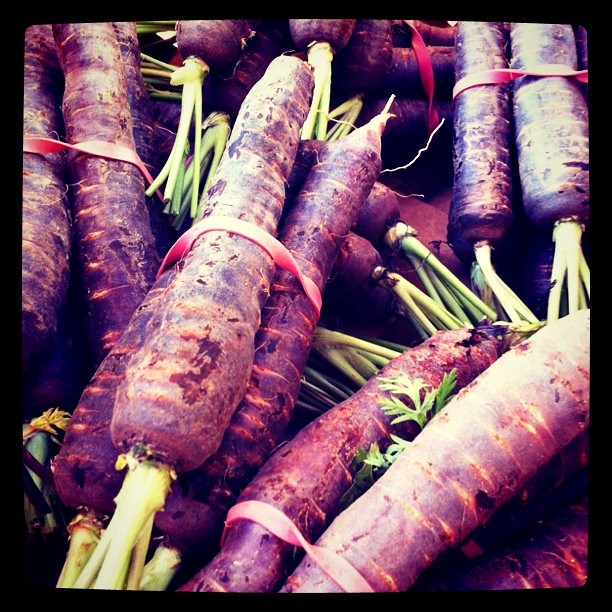
You might have heard of genetically modified organisms (GMOs), foodstuffs with their genetic material altered to make them easier to cultivate, or more nutritious. You might have heard that meat is being grown inlabs, set to become a more efficient alternative to the stuff that has to bother with being an animal before it’s a food. You may have heard the word ‘Frankenfoods’ which, to be perfectly honest, is just fear-mongering. What you probably haven’t heard is that carrots, when we originally started cultivating them, were a rather exciting shade of purple, but that some savvy European farmers bred the orange hue we know and love into them along the route to making them more nutritious. You almost certainly haven’t heard that wheat, as we know it today, is the result of centuries of cross-breeding of different grass species. And I’m sure you never heard cabbage, broccoli, brussels sprouts, and kale were all once the same foul-tasting yetedible plant – which ancient humans bred into several different edible yet foul-tasting plants, for some reason.


Carrots as they once were


 Yes, dear readers, genetic modification of that which we put into our bodies is so prevalent that almost everything you eat has, in one way or another, been subject to it. Nothing that we farm is the same as the ancestor species we found in the wild, and adapted to our needs. Be it for taste, ease of harvest, or just to see what would happen, humans have been altering our food for thousands of years (Barrows et al, 2014). But it’s only recently that we started doing it in laboratories, and that’s when people started getting angry.

 Genetically modified organisms (GMOs) have been a point of much contention since they were first developed; the thought of mixing up genetic material can seem a bit frightening, verging on the mad-scientist trope we all know and love. But they’re out there already, growing in fields and sitting around in our food. Or our food’s food; soybeans are one of the most common GMOs, and one of their main uses is to feed livestock (Jacobsen et al, 2013). I, personally, have nothing against GMOs, although I won’t deny that they come with their own unique set of issues and controversies. But first, let’s talk about the positives.

 Hunger is a big issue on this planet. I’ve mentioned this before; it’s kind of hard to avoid on an agriculture blog. Around 1 billion people live without enough food (Jacobsen et al, 2013), and even more live off diets that are lacking in some important nutrient like iron or vitamin a. The fact of the matter is, with a growing population, we need to find new ways to feed everyone. And this week I’m focussing on the potential from GMOs. High-yield varieties; there’s something good. More food, less land. Intensive, yes, but less land being used means less biodiversity lost, although it does also put more stress on the land in question. And let’s not forget that, with the impacts of climate change, it is going to be harder and harder to cultivate crops; growing seasons will change, and plants may no longer be suited to the environment around them, not to mention the migration of new pests into their areas. While genetic modification does take time, what with development and field tests, it’s still faster than selective breeding in creating pest-resistant or hardier strains (Qaim and Zilberman, 2003). Not to mention nutritional improvements; genetic modification to change the nutritional contents of a crop. Some (Borlaug, 2000) are hopeful about this kind of alteration, although there seem to be few real examples out there. Golden Rice springs to mind, engineered for vitamin a, which is hardly a bad idea.

 However, GMOs have their downsides as well. Patenting of genetic material means that these strains can only be bought from their parent companies, and farmers may not be allowed to keep seeds from their yield to plant a new crop (Jacobsen et al, 2013). It leads to a monopoly, with companies like Monsanto controlling the majority of the cotton market with specialised breeds such as Bt cotton, popular in India (Qaim and Zilberman, 2003).

 But one of the biggest concerns associated with GMOs is the transfer of these modified genetics to the species’ wild counterparts. It’s all fun and games until the weeds become weed-killer resistant. The process isn’t just as simple as one bout of pollen transfer, as figure 1 shows, but nonetheless the possibility of genetic transfer is real (Stewart et al, 2003), and the notion of some of these traits getting out of hand and into the wild is somewhat concerning. One of the biggest issues with agriculture is that is changes ecosystems, having negative ecological consequences; adding rogue ‘transgenetic’ material into the mix doesn’t seem like the best of ideas, somehow.


Figure 1: Gene-flow pathways between GMOs and their wild counterparts, in the event of interbreeding leading to slow hybridisation.
Source: Stewart et al 2003.

 I’m still not opposed to GMOs, but I will admit that even my opinion of them has changed a little during my research into them. They’re a good idea; they’re already out there, feeding more people than their un-modified counterparts could, and that’s nothing to sniff at. But they’re not a perfect solution to the hunger and ecological problems facing the world, and while we should always bear them in mind as an answer to the issues of the potential agracpocalyse, we also need to remember that they come with a risk or two.

Sunday, 20 November 2016

Fashion Foods

Do you remember a time when kale was that gross green stuff your mum tried to force you to eat at Sunday lunch? A simpler time, when it hadn’t made its insidious green way into everything from smoothies to cupcakes to, for some ungodly reason, pizza dough. A time when people weren’t droning incessantly on and on about the wonders of kale, using buzzwords like ‘superfood’ and ‘antioxidant’. A time when the world made sense.

 Kale is a prime example of what I like to call a fashion food, or a food craze as they’re usually known. Crazes like the cronut or those rainbow bagels are harmless enough; they look cool on Instagram, and they probably taste pretty good. But what I’m talking about here are the 'It' ingredients; that thing you suddenly have to be cooking with.

Just... why?


 Quinoa is a prime example of this; there were already plenty of grains available to us, but the foodies of the world jumped onto the quinoa train as soon as it pulled into the station, spurred on by social media and the general experience of viral hipsterism. Fashionable food sounds crazy, but it’s a thing. For the last few years, kale and avocado have been the a-list of crops, for some ungodly reason, taking over lives and advertising campaigns to a bizarre and memeworthy extent. I am no exception to the fashion food frenzy, as the unopened containers of millet, bulgar wheat, and chia seeds sitting in my cupboards will attest. I do maintain that I made a mean chia pudding, just to be clear.


 The problem with quinoa, the way its popularity has led to the people who depend on it being unable to afford it, is something that has been playing on my mind since I talked about it in another post not long ago. This isn’t a long post, I just wanted to reflect on the very real and seemingly unpredictable impacts our actions can have. Ethical shopping doesn’t sound like the most exciting thing in the world, but it can really make a difference to someone else. And I just wanted to say that, if you get anything out of reading this blog, I hope it’s that you take a moment to think before you jump onto the newest fad.

Wednesday, 16 November 2016

Food Insecurity and Malthusian Catastrophes

In a world with a population exceeding 7 billion and on the course for 9 billion within the next century, we desperately need new ways of producing enough food to keep everyone fed. We already have food shortages around the world, though these are often to do with localised droughts or infrastructure deficiencies making transportation difficult. The FAO estimates that around 795 million people around the world were undernourished in 2014-2016 (FAO, 2015).

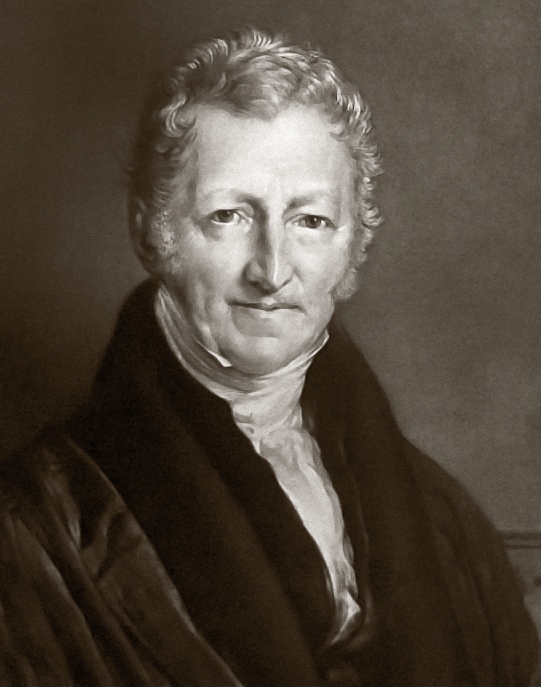
 Thomas Malthus believed in a future in which the hungry mass of humanity would outstrip the planet’s ability to feed it, leading to societal collapse and an eventual return to subsistence-level living (Den Herder et al, 2010). This was not an unreasonable thought in the 1800s, a time when the UK population was increasing but their capacity to produce food was not. His gloomy predictions were proved wrong, at the time, by the Industrial Revolution. With the advent of farming machines such as the combine harvester, food production in the west could keep up with its expanding populations. But was the Industrial Revolution merely a delay in Malthus’s predicted agrapocalypse? Machines continued to develop; but the global population is still growing, and there are areas of the world where food shortages and famines are a fact of life. Are we heading for a Malthusian dilemma of food unavailability?

Thomas Malthus, rocking the mutton chops.
Source: Wikimedia Commons, Thomas Robert Malthus.

 Defined by the FAO as “A situation that exists when people lack secure access to sufficient amounts of safe and nutritious food for normal growth and development and an active and healthy life,” food insecurity is an issue which plagues people in all parts of the world. There are many reasons for people to be suffering from food insecurity; even in the more developed parts of the world, not everyone has the income to keep themselves on the ‘secure’ side of that line. Sometimes the problem is caused by supply and demand; like when the increasing popularity of quinoa (keen-wah, say it with me) in the USA and the UK lead to the price of the crop tripling, leaving the people of Bolivia and Peru who depended on it as a main source of food unable to afford it. Yeah, your super-duper-vegan-friendly-protein-packed quinoa and pesto dinner doesn’t look so appetising anymore, does it? But supply and demand is the reality that we live with, and it’s the reason we’re using so much of our land to produce food that much of the world can’t even afford.

 That’s not the only reason, of course. As the wise Bob Geldof has taught us, drought and famine are enemies that are not so easily fought off; and they often crop up in the parts of the world that are least equipped to deal with them. The global population is still rising, though not in the more economically developed world, so there are still more mouths to feed. As I’ve mentioned previously, we produce a lot more food than we consume; unfortunately, we just don’t get it to all of the people who need it.

 Technological advances kept us clear of Malthus’s agrapocalypse, but unsustainable farming coupled with unequal economic situations, and famines and droughts caused by climate change, could be leading to a different kind. The technology needed to feed the global population is there, but the infrastructure to distribute the food and the wealth to distribute the machines are not. And therein lies the problem.

 No one really needs to go hungry, but they do because those of us with money drive the price up beyond the reach of those without. We literally steal food from the hands of communities that cannot afford to lose it. Technological advancement is, in some ways, exponential; we can build bigger and better greenhouses, raise our crops on nothing but water and sunlight, and take chickens from birth to butcher in under a month, but all this intensifying of the agricultural process costs money. So the better we get at it, the further behind we leave others. The Industrial Revolution saved us from Malthus’s predictions, but in a cruel irony it could become the reason for their eventual occurrence. 

Wednesday, 9 November 2016

John Oliver; Another Useful Video

After my post on food waste, I thought it might be useful to share this video of John Oliver's Last Week Tonight segment on, you guessed it, food waste. It's a little long, but it's factual and funny. He covers the production of methane in landfills as well, which is useful. Though, as a former Domino's employee, I cannot personally condone his suggestion that their delicious pizza belongs in the bin.
Fair warning, it does contain some strong language.


Source: Last Week Tonight With John Oliver, Food Waste, 2015.

Tuesday, 8 November 2016

Waste Not Want Not

Perfectly good food in a bin; a surprisingly common occurrence.


In terms of the unsustainable nature of our agricultural industry, perhaps one of the most frustrating aspects is that of food waste. The phenomenal amount of food which goes to waste every year is largely a product of uneven distribution of the total production. It has, in fact, been estimated that food waste could account for around a third of total crop production (Cassidy et al, 2013); an enormous quantity considering not only the huge areas of land dedicated to arable agriculture, but also the implications in terms of emissions and other environmental impacts. Imagine if we could reduce arable emissions by a third, or reforest vast swathes of land currently dedicated to monoculture that doesn’t even make it from farm to fork.

 But why is there so much food waste, you might ask? And, perhaps more importantly, how can it be prevented? Food waste occurs at three main levels: industrial, retail, and consumer (Dou et al 2016). At the industrial level, there is waste occurring as a by-product of overall production; for example, bones in the meat industry, or the inedible parts of meat. There is also an issue of ‘manufacturing mishaps’, whereby a product is overproduced, or the operation changes and some of the original is left over. The former type of waste cannot generally be eaten by humans, but does have the potential for other industrial uses, while the latter tends to be entirely edible. At the retail level, there is the issue of ‘reject’ products; packaging damaged in transport, bruised fruit, or misshapen cakes may be removed from the shelves as they do not meet the consumer-oriented notion of aesthetic perfection. And at the consumer level itself, individuals may over-buy some items, and throw them away when they go out of date. While from a personal perspective, the odd mouldy loaf of bread or blackened banana may not seem like such a big deal, when taken together it all adds up to an astounding amount of waste. In fact, while in less economically developed countries a large part of food waste is often to do with bad infrastructure causing problems for distribution, in more economically developed countries – the ‘global north’ – consumer waste is thought to be the largest of the three.

 It is important to mention here that food waste is not just about, well, wasting food. At face value, it is hedonistic and wildly unfair that millions of tonnes of food are thrown away each year, when one in nine people on Earth doesn’t have enough to eat (Dou et al, 2016), but the problem has far more layers than that. For a start, as already mentioned, agricultural production is a major global emitter of greenhouse gases, driving the effects of human induced global warming. As well as this, to produce all this food large amounts of land must be dedicated to the industry, resulting in the destruction of ecosystems. Swathes of the Amazon rainforest have been cut down to make way for cattle and soy production, and in Indonesia deforestation has destroyed the habitats of many endangered species to allow a monoculture of palm oil to spring up. (For some dramatic scenes of the latter, have a look at Leonardo DiCaprio’s documentary ‘Before the Flood’.)

 Once food reaches a landfill, as so much of it does, it would be easy to assume that it would simply biodegrade. Unfortunately, this is not the case. As so much waste is piled up in a landfill, the pressure and environment in which the organic matter is left lead to anaerobic respiration, resulting in the production of methane (Karthikeyan et al, 2016). So not only do these millions of metric tonnes a food a year, which never make it from farm to fork, emit carbon dioxide in their production; once left to rot, they lead to even more greenhouse gases.

 So, what can be done to reduce food waste? Like the waste itself, the answer to this is more complex than the question. For a start, there are two parts to this reduction, both of which need to be implemented to reduce the waste in a meaningful way. First, food needs to be diverted from landfills to plates – not literally, of course, that would be a tad unsavoury. But biomass which is destined to be thrown out for no reason other than its packaging is a little dented, or the company simply doesn’t want the hassle of selling its meat trimmings on, needs to find its way to useful places. That may be at the tables of those who are not receiving enough food now or, in the case of inedible products, it may be to various industrial uses. The second part is preventing the waste from being created in the first place. At the consumer level, this means educating and encouraging individuals to buy only what they are going to use. At the industrial level, it involves tailoring the amount of production to the demand, and avoiding overproduction.

 In a global agriculture, where just a can of Coke requires ingredients produced in half a dozen countries the world over (sugar, vanilla, cinnamon, lime, caffeine… the list goes on), it is always going to be difficult to perfectly fit the supply to the demand. But when a third of what we produce goes to waste every year, it’s at least worth a try.

Saturday, 22 October 2016

Crash Course; A Useful Video

I am a big fan of the 'Crash Course' series of learning videos, so I thought I'd share the first in the 'World History' course; 'The Agricultural Revolution'. It provides a good overview of the development of agriculture and some of its broader impacts, and is presented in a witty and easy to understand way. Enjoy!


Source: Crash Course World History #1, The Agricultural Revolution, 2012.

Sunday, 16 October 2016

Introduction

From the beginning of human civilisation, agriculture has played a pivotal role. When the responsibility of producing food for the many is handled by the few, societies see an increase in those available to innovate, create, and solve problems. If a society is no longer relying on the resources that naturally occur, but are adapting the land around them to create more, then larger groups of people are able to live in the same areas of land; facilitating opportunities for more and more people to share ideas and work together. Without the development of agriculture, humans would be unable to exist in the large cities in which many of us now live, and there would be little time for the technological advances which we as a species have made.


Dairy farming now; udderly different from its beginnings.


 It is unsurprising, then, that as populations have grown, so have farms grown not just in land use but in overall output; developing new methods to produce more and more food for a global population demanding to be fed. Battery farming, pesticides, selective breeding, and genetically modified organisms (GMOs) are all innovations in the farming industry which have been made to supply the fantastic number of humans now living on the planet. FAOSTAT, the statistics division of the Food and Agriculture Organisation of the United Nations, provides interactive data on food production, emissions, land use emissions, and many other related factors, with the options to look at specific years, countries, and crops, for anyone who would like to take a look at how these things have changed over time.


Farms around the world are varied in layout in techniques.
A terraced farm in Viet Nam.


 With all of this land use, production, and changes to the natural environment, it should come as no surprise that agriculture has had as profound effect on the climate and the environment as any other large and enduring industry. Soil degradation, water usage, erosion, and decreases in biodiversity are all issues inherent in our agricultural practices (Jacobsen et al, 2013). There are estimates that nearly half of the world’s land is now used for agriculture, meaning enormous alterations to the natural ecosystems and biodiversity in the area, while agricultural production itself has large carbon footprints. Beef has an estimated carbon footprint of 68.8kgC02e/kg – kg of carbon dioxide emitted per kg of food produced – with poultry and pulses weighing in at 5.4kgCO2e/kg and 3.3kgCO2e/kg respectively (Scarborough et al, 2014).


That's a lot of fields.
Source: Wikimedia Commons, 2010. View from above in the USA


 This all adds up to the knowledge that agriculture is both entirely necessary for our society to prevail, but also a major contributor to human induced climate change and damages to the environment. Which creates the necessity for advances in sustainable agriculture, from high-yield GMOs to low-input systems that work with the surrounding environment. These climactic impacts, and the possibility for mitigating them, will be the focus of this blog; a large topic which I intend to break down, investigate, and discuss over the next few months.


 I look forward to your joining me.

 Oh, and a side note. Look out for my use of the word 'agrapocalypse'. It's a term I coined while working on my undergraduate dissertation and, as far as I can tell, no one else got there before me. I use it to refer to the possibility of a future in which humanity's agricultural practices, in one way or another, lead to unforeseen, wide-reaching, and negative impacts that could cause profound changes in the way our environment, or our society, continues to function. I am a very fun person.