Wednesday, 4 January 2017

Deforestation (Run, Forest, run!)


A fair point.


Deforestation. Not a word with positive connotations, is it? Don’t worry; I am definitely not here to change that. But I am here to inform you a bit more about it, because I’m fun like that. People talk about the Amazon a lot. It’s like the polar bear of ecosystems; big and exciting, and everyone knows that we need to save it. It’s the one you talk about because people have heard of it, and because you can put it on the front of a magazine and people will care. No one wants to hear about preserving peat bogs anymore than they want a big picture of a worm telling them it needs their help. People want pretty things like polar bears and enormous, mysterious forests to care about. In short, poster children.


Look at that vista; how can you not want to save it?


 And let’s be clear, the poster child of biomes is in trouble, but so are the Indonesian rainforests, and plenty of other ecosystems. There are forests all over the world; there used to be a lot more, in fact England was once covered in trees. Think of all those fairytales where people get lost in the woods; can you imagine managing that in the UK today? Walk in a straight line for an hour or two and you’ll find an A road. But time was you could wander for days without ever leaving the trees. We’ve lost a lot of that over the centuries, and now we’re doing the same to the rainforests of the world. We have many reasons, but one of the biggest ones is agriculture; in 2002, it was estimated that agriculture was the driver behind 96% of deforestation (Geist and Lambin, 2002).

 You’ve probably heard that palm oil is far from ecologically friendly, but do you know why? One word, dear readers; monoculture. From mono, meaning one; an area in which only one crop is cultivated. Swathes of Indonesian rainforest are cut down in favour on palm oil and other monoculture crops, resulting in enormous amounts of deforestation. And we don’t call the rainforests the lungs of the Earth for nothing; we need them. For air. That we breathe. But monoculture has another, sinister impact; it destroys the natural ecosystem. The habitat of a multitude of endangered species, being cut down for products you probably barely think about on a day-to-day basis. Go on, try to think of something you use palm oil for. I dare you. (Actually, it’s in half the stuff we use).


The same trees, as far as the eye can see.


 One of the big drivers of deforestation in favour of agriculture. Cash crops in Indonesia like palm oil, cocoa, and coffee became popular because of their monetary value; developing from relatively eco-friendly agroforests to all-encompassing monoculture in a period of only about three decades (Feintrenie et al, 2010). The fact of the matter is, most people want to increase their income; and they’re not willing to jeopardise that in the name of conservation. And, side note, can we blame them? It’s easy enough for those of us living in relative financial stability to look with scorn upon those who would squander this natural beauty in favour of cold hard cash, but when it’s a choice between deforestation or poverty, would any of us really choose differently? Too often, the poor pay the price for conservation sought by the rich (Martin et al, 2013).

  And what is the impact of all of this deforestation? We’ve all seen the pictures of sad orangutans looking lost and pathetic, as would you if someone had just replaced your home with a field of coconut trees, but the reality is an enormous loss of diversity from the rainforests we’re cutting down. Biodiversity isn’t just something that’s nice to look at; it’s important for the entire ecosystem that a balance is maintained, and a lot of the ecosystem services we rely on – air, pollination, and the like – rely themselves on some stability in the ecosystem (Memmott et al, 2007). Not only that, but monoculture results in a loss of genetic diversity in the area, which can cause problems for adaptation to the kinds of changes anthropogenic global warming is driving.


When will my forest return from the war?
But seriously, these guys are losing their habitat. It's not good.


 These large forests also do a lot to dampen the impacts of our greenhouse gas emissions; through 
photosynthesis, those enormous areas of trees take up tonnes of carbon dioxide on a daily basis, but when we chop them down that helping hand is cut away. A study in 2005 (Santilli et al) estimated that the annual tropical deforestation in Brazil and Indonesia would equal about 80% of the emissions supposed to be reduced under the Kyoto Protocol. Deforestation is thought to account for between 5-20% of global carbon emissions annually, with an area roughly the size of Egypt being cut down from 2000-2012 (Norris, 2016). More, in 2014 Arima et al found that enforcement of deforestation prevention in Brazil over 3 years avoided ~10,000km² of forest loss, as well as emissions of 1.23*10^-1Pg carbon.


 This is one of those facets of agriculture that seem irredeemable. The loss of so much natural beauty, so much diversity and, if you’re not swayed by any of that, the services we receive from these ecosystems is no small issue. But, until we can change policies to discourage expansion of agriculture into tropical forests, and find a way to enforce these policies effectively, there doesn’t seem to be much hope of change. It isn’t hopeless; Arima et al showed that with the benefits of good enforcement of forestry protection, but how can we protect the entirety of these enormous biomes? Is there a way to provide as much financial incentive to protect the forests as people receive to cut them down for farmland, without damaging economies? There doesn’t seem to be an easy solution, as always with the agricultural system.

Here's my beef


As someone who hasn't eaten meat for about seven years, the thought of a veggie-friendly but convincingly meaty burger is pretty exciting. And in terms of environmental friendliness, this is way better than actual meat. Take a look at the video, and read this article if you're interested in this kind of thing.


Source: Buzzfeed Video, Bleeding Vegan Burger, 2016.

Sunday, 1 January 2017

Bananagraphic


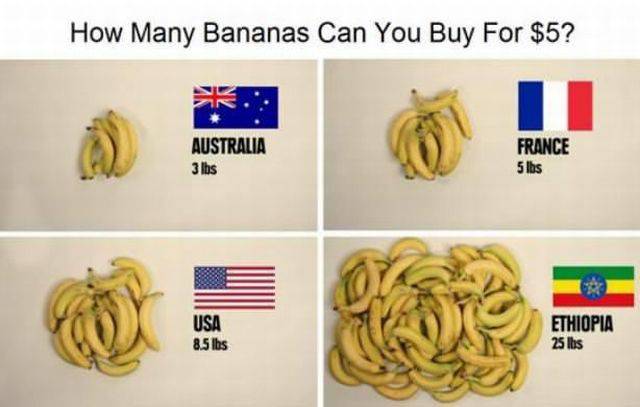
Happy new year! I had no idea what to do with this information, but then I thought; why not share it with my dear readers? Mull this over. While it's difficult to know how reliable the information is, it is an interesting figure.
Source: Simply Fantastic, Lesley Voth, 2016.

Monday, 26 December 2016

Merry Christmas!

Here's some food I won't be wasting! Homemade Finnish Korvapuusti. Half of them are already gone! I'd put up a picture of the meat-free lentil loaf I make for Christmas dinner (way better than it sounds), but it's mostly gone now. I'll be back with a longer post next week.

Source: Lucrezia Slinn, 2016.

Monday, 12 December 2016

An Article on Food Insecurity

Just an article on food insecurity in the UK from an MP. A reminder that, among all our overproduction, inefficiency, and wastage, hunger still exists even in what we might like to think of as the developed world.

People sorting at a food bank.

Thursday, 8 December 2016

Laudato Si'

A few weeks ago, I was at a conference on Laudato Si', which is an encyclical by Pope Francis about the issue of climate change. I was asked to write an article on the conference for my home diocesan magazine, the Portsmouth People. Although it's not directly related to agriculture and its role in the wider environment, it does illustrate how humans are now inextricable from the earth system, so I thought I would share it here. Click here and go to page 8 of the pdf for the published article, or here for a longer piece published as supplementary material on the magazine's website. Enjoy!

Wednesday, 7 December 2016

What's Your Beef? The Meat Industry and the Environment


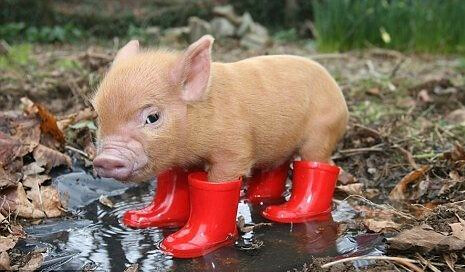
A very cute piglet.
Source: flickr user Vegan Feast Catering, piggy in wellies, 2010.

In the world of agriculture, one emitter stands head and shoulders above the others; meat. Now, I wrote my undergrad dissertation on a facet of this topic, and so in the interests of not plagiarising myself and also of just researching something else for a change, I’ve elected not to focus too closely on this particular issue; but it’s not one that I can ignore entirely, and with good reason. Part of that reason is that, as a vegetarian myself, I am inclined to feel somewhat smug about the whole ‘my carbon emissions are lower than your carbon emissions’ thing, but that smugness was not enough to get me through a 12,000 word dissertation on its own. The fact of the matter is, it’s a big issue. Setting aside the ethical arguments for and against meat – which, while close to my subjective heart, really have little to no place in science – the consumption of animal products, constantly growing with economic improvement, contributes hugely to the dietary greenhouse gas emissions of a large number of the human population, while the cultivation of livestock tends to result in huge swathes of deforestation (case in point: the Amazon).


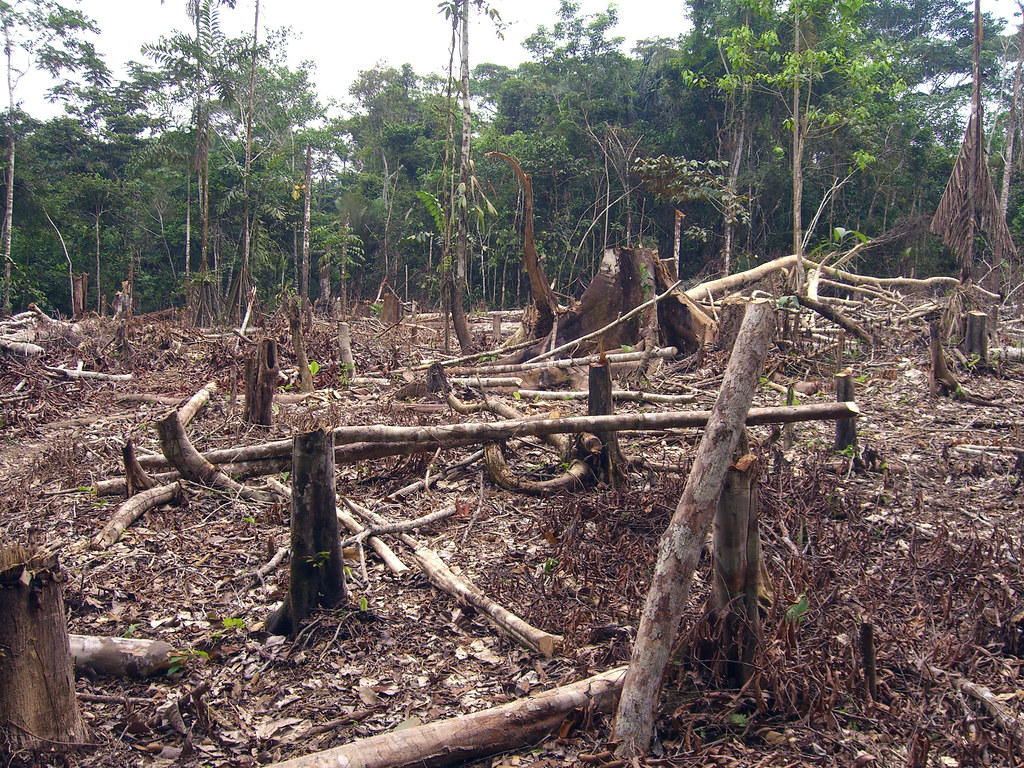
Deforestation in the Amazon
Source: flickr user Matt Zimmerman, slash and burn agriculture in the Amazon, 2007.

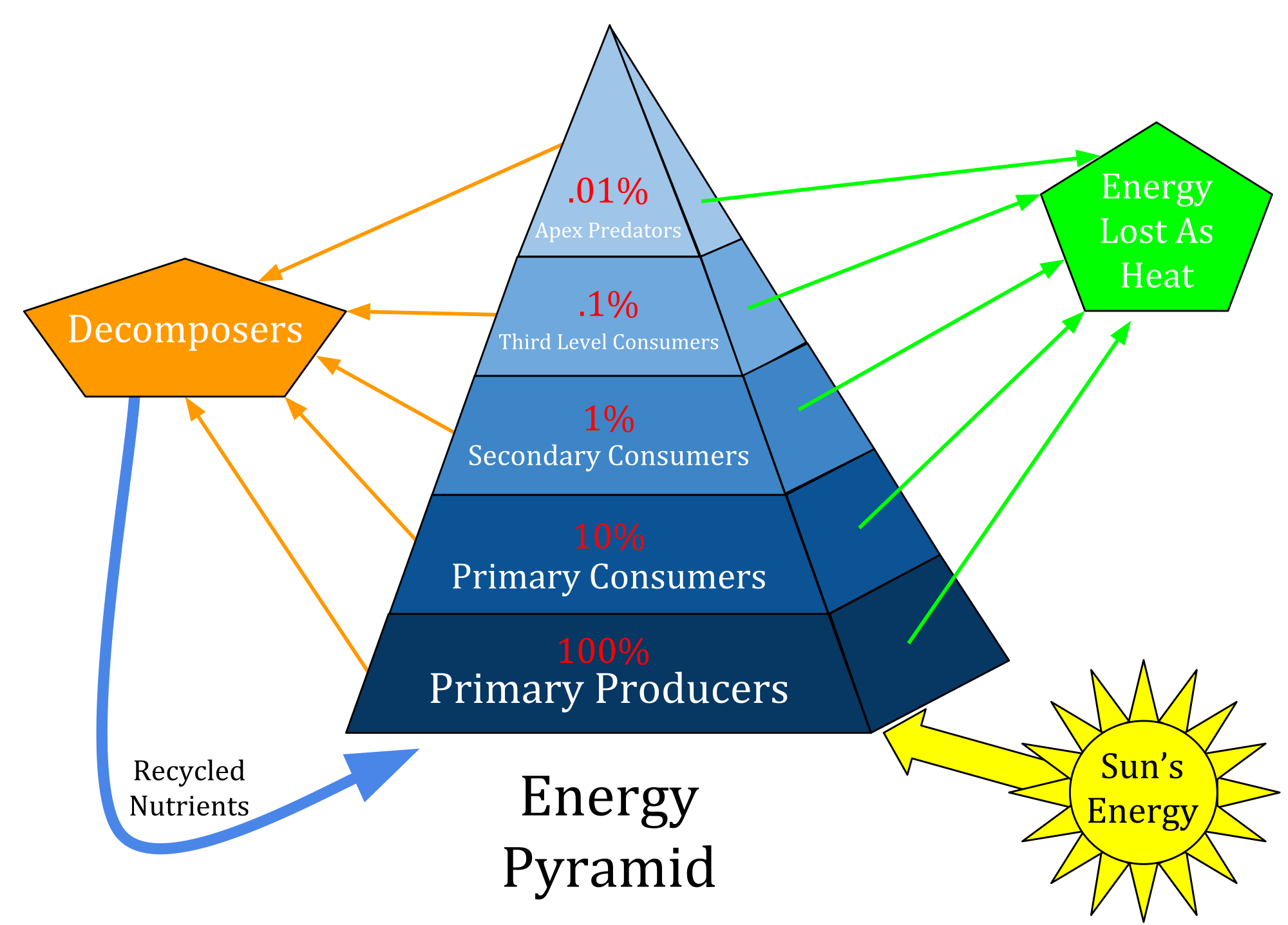
 It’s simple food chain dynamics, at its basic level; the higher up the chain you go, the more cumulative effort is being put in to get the energy attained from consuming another organism. Enormous amounts of grass or hay or soy have to go into feeding a cow every day for months or years, just to feed a human for one meal. One study (Cassidy et al, 2013) calculates that around 36% of crop calories produced by humans do not make it to a meal eat by a human. Which is not just inefficient; producing the food for your food requires energy, and land, and land use change. That production leads to the release of greenhouse gases, such as carbon dioxide and methane, into the atmosphere; and that’s something we generally view as bad. Not only this, but in order to produce all the food, and the food’s food, we have been cutting down our rainforests. I’m going to cover the effects of deforestation and monoculture on an ecosystem elsewhere, but suffice it to say that over the last 40 or so years, around 15-20% of the Amazon Rainforest has been deforested, much of it for use as land for cattle ranching. Trees take in carbon dioxide; the more we cut down, the fewer there are to mitigate our own emissions. So we’re really shooting ourselves in the foot with that one.


An example of an energy pyramid, showing
how less energy is available the higher you go.

 Now, I am not suggesting that the whole world goes vegetarian (though if we did, we’d have a lot more land free for important things like forests and orangutans) but honestly, just small changes can make a big difference. In the western world, we’ve grown accustomed to having relatively cheap meat easily available to us at all times, but this wasn’t always the way. The average amount of meat which makes up a diet in the west has increased significantly with the decrease in prices of animal products as intensive farming and long term storage became more and more popular (Hawkesworth et al, 2010). People used to live with a lot less of it, and they did pretty well. Actually, it’s healthier to cut back a bit.

There have been a few policies or movements, in the last few years, calling for a decrease in meat consumption. Pope Benedict XVI, in 2011, recommended that Catholics cease eating meat on Fridays; ‘fish Fridays’, as the practice has become known. This is more for a religious observance, but it’s still an easy way to cut back on meat. That one day a week adds up. The mayor of Turin, Italy, has announced plans to create the world’s first ‘meat-freecity’, with a vegan food festival, educational programmes about alternative diets in schools, and a meat free day every week, all to encourage people to consume less meat in the name of environmentalism. This mayor’s ambitious plans are not without push-back from a city with a rich culinary history, but from an environmental standpoint it’s a step in the right direction.

 I don’t want to come across as too preachy, so I won't go on too much. But the point is if you eat meat or other animal products then your dietary emissions are probably higher than someone who doesn’t, and that might be a problem.

If you're interested in transitioning to a meat-free, or just lower meat, diet then the Vegetarian Society has lots of useful information on how to do so healthily, and Happy Cow is really great for finding good veggie restaurants near you.