People sorting at a food bank.
'The Grain Drain' is a blog focused on the subject agriculture and its role in the changing climate, and the possibilities of shifts to sustainable practices.
Monday, 12 December 2016
An Article on Food Insecurity
Just an article on food insecurity in the UK from an MP. A reminder that, among all our overproduction, inefficiency, and wastage, hunger still exists even in what we might like to think of as the developed world.
Thursday, 8 December 2016
Laudato Si'
A few weeks ago, I was at a conference on Laudato Si', which is an encyclical by Pope Francis about the issue of climate change. I was asked to write an article on the conference for my home diocesan magazine, the Portsmouth People. Although it's not directly related to agriculture and its role in the wider environment, it does illustrate how humans are now inextricable from the earth system, so I thought I would share it here. Click here and go to page 8 of the pdf for the published article, or here for a longer piece published as supplementary material on the magazine's website. Enjoy!
Wednesday, 7 December 2016
What's Your Beef? The Meat Industry and the Environment
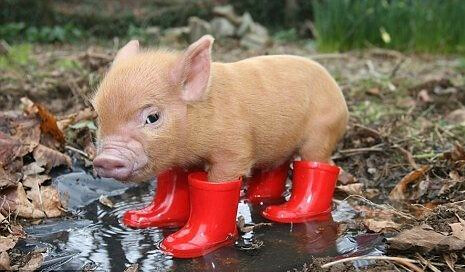
A very cute piglet.
Source: flickr user Vegan Feast Catering, piggy in wellies, 2010.
In the world of agriculture, one emitter stands head and
shoulders above the others; meat. Now, I wrote my undergrad dissertation on a
facet of this topic, and so in the interests of not plagiarising myself and
also of just researching something else for a change, I’ve elected not to focus
too closely on this particular issue; but it’s not one that I can ignore
entirely, and with good reason. Part of that reason is that, as a vegetarian
myself, I am inclined to feel somewhat smug about the whole ‘my carbon
emissions are lower than your carbon emissions’ thing, but that smugness was
not enough to get me through a 12,000 word dissertation on its own. The fact of
the matter is, it’s a big issue. Setting aside the ethical arguments for and
against meat – which, while close to my subjective heart, really have little to
no place in science – the consumption of animal products, constantly growing
with economic improvement, contributes hugely to the dietary greenhouse gas
emissions of a large number of the human population, while the cultivation of
livestock tends to result in huge swathes of deforestation (case in point: the
Amazon).
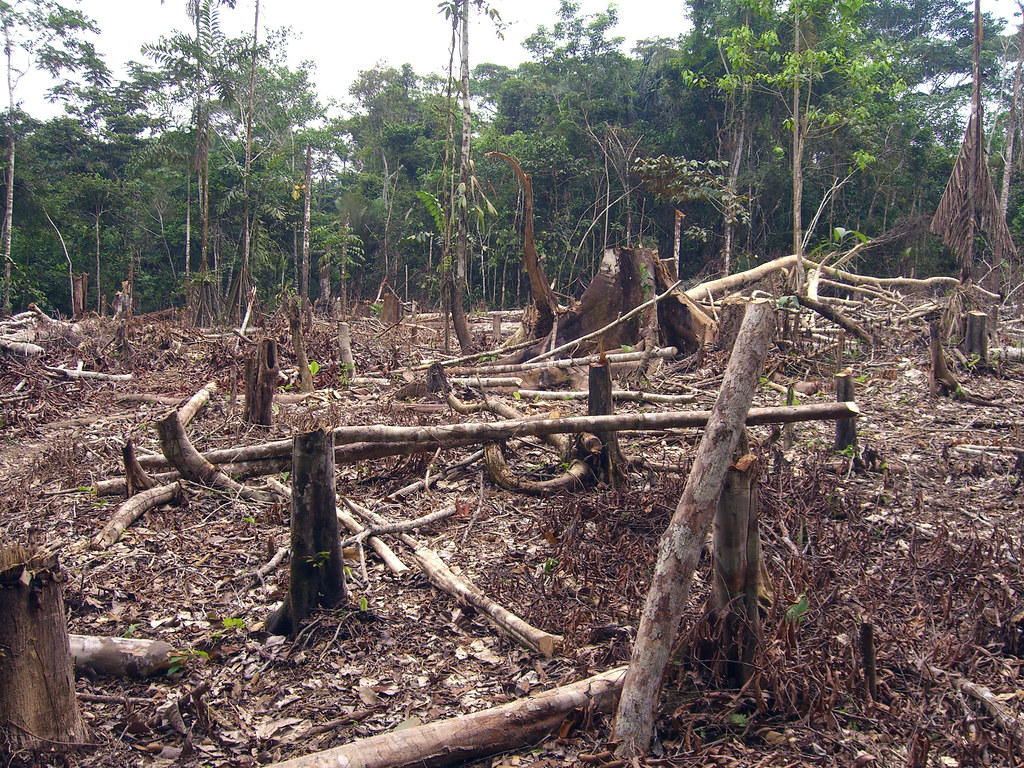
Deforestation in the Amazon
Source: flickr user Matt Zimmerman, slash and burn agriculture in the Amazon, 2007.
It’s simple food
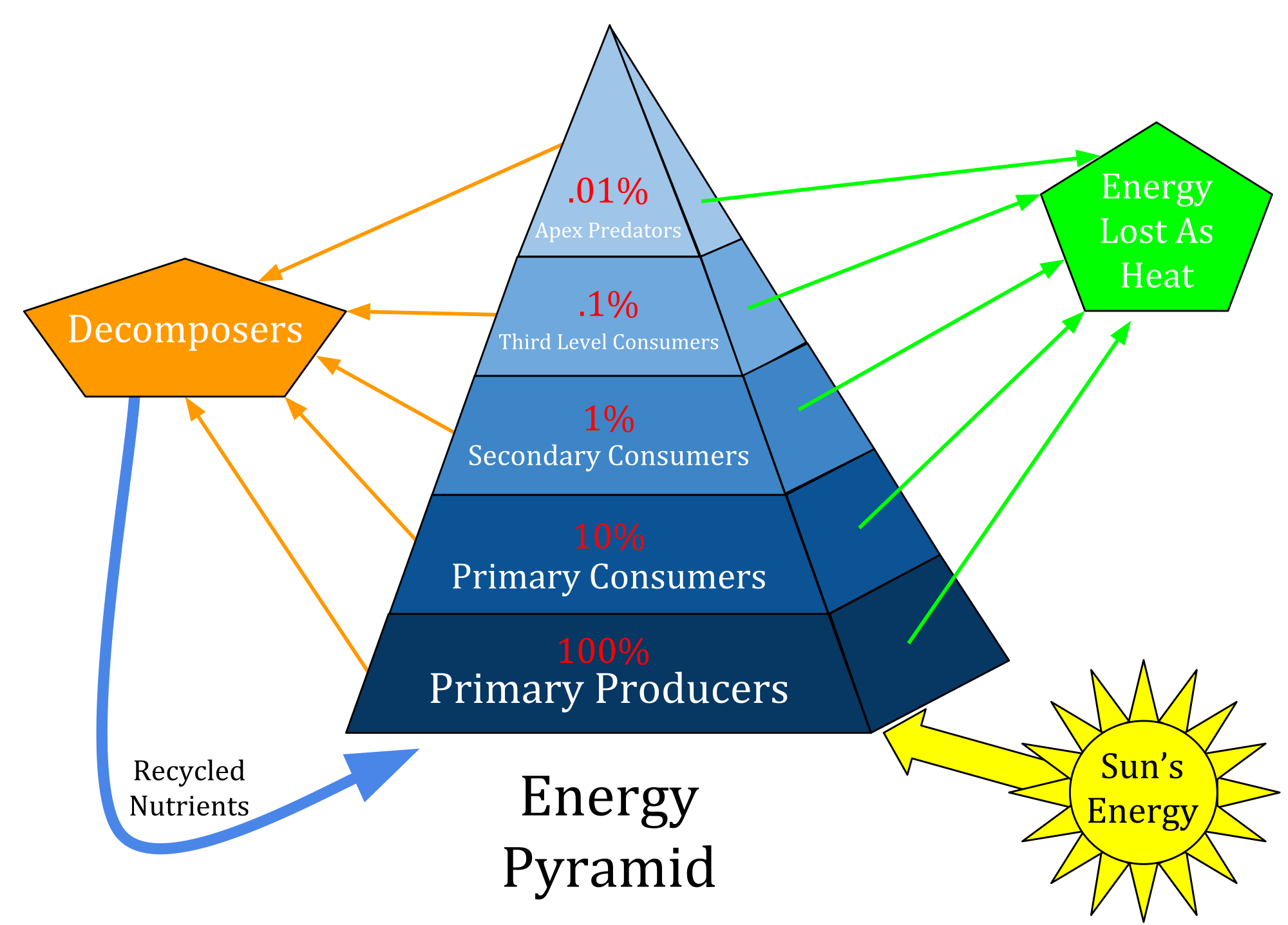
chain dynamics, at its basic level; the higher up the chain you go, the more cumulative
effort is being put in to get the energy attained from consuming another
organism. Enormous amounts of grass or hay or soy have to go into feeding a cow
every day for months or years, just to feed a human for one meal. One study
(Cassidy et al, 2013) calculates that around 36% of crop calories produced by
humans do not make it to a meal eat by a human. Which is not just inefficient;
producing the food for your food
requires energy, and land, and land use change. That production leads to the
release of greenhouse gases, such as carbon dioxide and methane, into the
atmosphere; and that’s something we generally view as bad. Not only this, but in
order to produce all the food, and the food’s food, we have been cutting down our
rainforests. I’m going to cover the effects of deforestation and monoculture on
an ecosystem elsewhere, but suffice it to say that over the last 40 or so
years, around 15-20% of the Amazon Rainforest has been deforested, much of it
for use as land for cattle ranching. Trees take in carbon dioxide; the more we cut
down, the fewer there are to mitigate our own emissions. So we’re really
shooting ourselves in the foot with that one.
An example of an energy pyramid, showing
how less energy is available the higher you go.
Now, I am not
suggesting that the whole world goes vegetarian (though if we did, we’d have a
lot more land free for important things like forests and orangutans) but
honestly, just small changes can make a big difference. In the western world,
we’ve grown accustomed to having relatively cheap meat easily available to us
at all times, but this wasn’t always the way. The average amount of meat which
makes up a diet in the west has increased significantly with the decrease in
prices of animal products as intensive farming and long term storage became
more and more popular (Hawkesworth et al, 2010). People used to live with a lot
less of it, and they did pretty well. Actually, it’s healthier to cut back a bit.
There have been a few policies or movements, in the last few years, calling for a decrease in meat consumption. Pope Benedict XVI, in 2011, recommended that Catholics cease eating meat on Fridays; ‘fish Fridays’, as the practice has become known. This is more for a religious observance, but it’s still an easy way to cut back on meat. That one day a week adds up. The mayor of Turin, Italy, has announced plans to create the world’s first ‘meat-freecity’, with a vegan food festival, educational programmes about alternative diets in schools, and a meat free day every week, all to encourage people to consume less meat in the name of environmentalism. This mayor’s ambitious plans are not without push-back from a city with a rich culinary history, but from an environmental standpoint it’s a step in the right direction.
I don’t want to come across as too
preachy, so I won't go on too much. But the point is if you eat meat or other animal products then your
dietary emissions are probably higher than someone who doesn’t, and that might be a
problem.
If you're interested in transitioning to a meat-free, or just lower meat, diet then the Vegetarian Society has lots of useful information on how to do so healthily, and Happy Cow is really great for finding good veggie restaurants near you.
Wednesday, 30 November 2016
Sustain Ability
This week I want to shine a bit of light in the gloom I’ve
been spouting, and talk about sustainable agricultural practices. Yes, I know
that I’ve been going on about how our agricultural systems are enormous
emitters and we’re all going to eat ourselves into an agrapocalypse of high
emissions and vanishing rainforests, but there is some hope left out there!
Humans don’t actually want to become extinct, so sometimes we do face our
problems and work on solutions.
When looking at news stories on breakthroughs in the field, it can be a little hard to sort the wheat from the chaff (agriculture joke for you there) but there have been a few recently that I’ve come across and found somewhat interesting. First, this one about feeding seaweed to cows has been doing the rounds recently, and while it probably needs a little more experimentation before it becomes the norm, it’s quite an exciting notion. I plan, in a later post, to discuss why pastoral farming in general isn’t the best thing for the environment, but something people are often fascinated with is the fact that cow burps emit a lot of methane. And now, this study seems to be en route to solving that by adding this seaweed to cows' diets. It sounds a little funny, and trivial, but it’s actually quite a big thing. Hundreds of thousands of cows are out there right now, burping us into a future of sea level rise and freak weather conditions, and finally someone is doing something about it. Maybe.
I also got hold of this one (image below), about Sundrop Farms in Australia, thanks to my dear grandmother’s penchant for sending me newspaper clippings she thinks I’d like. Growing crops with nothing but seawater and solar power sounds like a pipe dream, but if we can make it real then… well, good. Seawater and sunshine and both things of which we have something of an abundance, so we might as well put them to good use. Desalination of water is an energy-intensive process, but using solar power would keep it ‘green’. It’s an exciting concept, at any rate.
Chris Moss, The Sunday Telegraph, November 27th 2016
These are just a
couple of current examples of changes in the way we treat the agricultural
system, aiming towards a greener food industry. While these developments are both
exciting and funny sounding, it’s important to remember that most agriculture
does not in fact take place in laboratories or experimental facilities. There
are hundreds of thousands of farms in the world, all operating under slightly
different systems, but the majority of them favouring emissions-heavy
techniques. Sustainable agriculture is an exciting prospect and a wonderful goal,
but it takes innovation and fundamental changes to the way in which we view and
treat our food supply.
Wednesday, 23 November 2016
GMO - OMG!
You might have heard of genetically modified organisms
(GMOs), foodstuffs with their genetic material altered to make them easier to
cultivate, or more nutritious. You might have heard that meat is being grown inlabs, set to become a more efficient alternative to the stuff that has to
bother with being an animal before it’s a food. You may have heard the word ‘Frankenfoods’
which, to be perfectly honest, is just fear-mongering. What you probably
haven’t heard is that carrots, when we originally started cultivating them,
were a rather exciting shade of purple, but that some savvy European farmers
bred the orange hue we know and love into them along the route to making them
more nutritious. You almost certainly haven’t heard that wheat, as we know it
today, is the result of centuries of cross-breeding of different grass species. And I’m sure you never heard cabbage,
broccoli, brussels sprouts, and kale were all once the same foul-tasting yetedible plant – which ancient humans bred into several different edible yet
foul-tasting plants, for some reason.
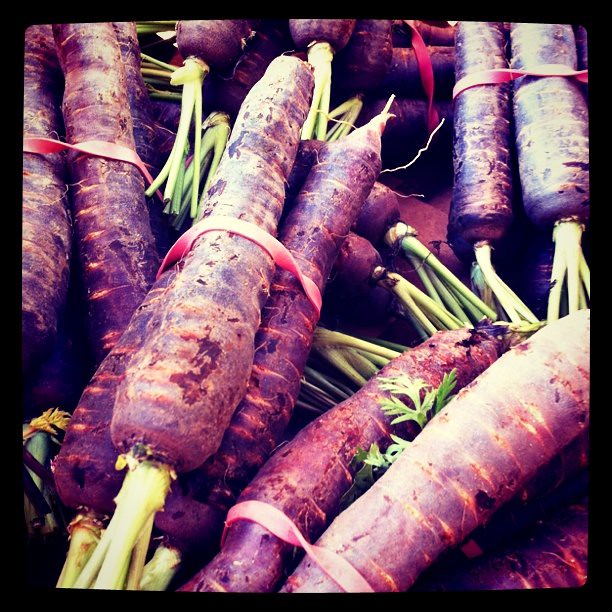
Carrots as they once were
Source: flickr user Carl Black, Cosmic Purple Carrots, 2011.
Yes, dear readers,
genetic modification of that which we put into our bodies is so prevalent that
almost everything you eat has, in one way or another, been subject to it.
Nothing that we farm is the same as the ancestor species we found in the wild,
and adapted to our needs. Be it for taste, ease of harvest, or just to see what
would happen, humans have been altering our food for thousands of years
(Barrows et al, 2014). But it’s only recently that we started doing it in
laboratories, and that’s when people started getting angry.
Genetically modified
organisms (GMOs) have been a point of much contention since they were first
developed; the thought of mixing up genetic material can seem a bit
frightening, verging on the mad-scientist trope we all know and love. But they’re
out there already, growing in fields and sitting around in our food. Or our
food’s food; soybeans are one of the most common GMOs, and one of their main
uses is to feed livestock (Jacobsen et al, 2013). I, personally, have nothing
against GMOs, although I won’t deny that they come with their own unique set of
issues and controversies. But first, let’s talk about the positives.
Hunger is a big issue
on this planet. I’ve mentioned this before; it’s kind of hard to avoid on an
agriculture blog. Around 1 billion people live without enough food (Jacobsen et
al, 2013), and even more live off diets that are lacking in some important
nutrient like iron or vitamin a. The fact of the matter is, with a growing
population, we need to find new ways to feed everyone. And this week I’m
focussing on the potential from GMOs. High-yield varieties; there’s something
good. More food, less land. Intensive, yes, but less land being used means less
biodiversity lost, although it does also put more stress on the land in
question. And let’s not forget that, with the impacts of climate change, it is
going to be harder and harder to cultivate crops; growing seasons will change,
and plants may no longer be suited to the environment around them, not to
mention the migration of new pests into their areas. While genetic modification
does take time, what with development and field tests, it’s still faster than
selective breeding in creating pest-resistant or hardier strains (Qaim and Zilberman, 2003). Not to mention nutritional improvements; genetic modification
to change the nutritional contents of a crop. Some (Borlaug, 2000) are hopeful
about this kind of alteration, although there seem to be few real examples out
there. Golden Rice springs to mind, engineered for vitamin a, which is hardly a
bad idea.
However, GMOs have
their downsides as well. Patenting of genetic material means that these strains
can only be bought from their parent companies, and farmers may not be allowed
to keep seeds from their yield to plant a new crop (Jacobsen et al, 2013). It
leads to a monopoly, with companies like Monsanto controlling the majority of
the cotton market with specialised breeds such as Bt cotton, popular in India
(Qaim and Zilberman, 2003).
But one of the
biggest concerns associated with GMOs is the transfer of these modified
genetics to the species’ wild counterparts. It’s all fun and games until the
weeds become weed-killer resistant. The process isn’t just as simple as one
bout of pollen transfer, as figure 1 shows, but nonetheless the possibility of
genetic transfer is real (Stewart et al, 2003), and the notion of some of these
traits getting out of hand and into the wild is somewhat concerning. One of the
biggest issues with agriculture is that is changes ecosystems, having negative
ecological consequences; adding rogue ‘transgenetic’ material into the mix doesn’t
seem like the best of ideas, somehow.
Figure 1: Gene-flow pathways between GMOs and their wild counterparts, in the event of interbreeding leading to slow hybridisation.
Source: Stewart et al 2003.
I’m still not opposed
to GMOs, but I will admit that even my opinion of them has changed a little
during my research into them. They’re a good idea; they’re already out there,
feeding more people than their un-modified counterparts could, and that’s
nothing to sniff at. But they’re not a perfect solution to the hunger and
ecological problems facing the world, and while we should always bear them in
mind as an answer to the issues of the potential agracpocalyse, we also need to
remember that they come with a risk or two.
Sunday, 20 November 2016
Fashion Foods
Do you remember a time when kale was that gross green stuff
your mum tried to force you to eat at Sunday lunch? A simpler time, when it
hadn’t made its insidious green way into everything from smoothies to cupcakes
to, for some ungodly reason, pizza dough. A time when people weren’t droning incessantly
on and on about the wonders of kale, using buzzwords like ‘superfood’ and ‘antioxidant’. A time when the world made sense.
Kale is a prime example of what I like to call a fashion food, or a food craze as they’re usually
known. Crazes like the cronut or those rainbow bagels are harmless enough; they
look cool on Instagram, and they probably taste pretty good. But what I’m
talking about here are the 'It' ingredients; that thing you suddenly have to be
cooking with.
Just... why?
Source: flickr user Arnold Gatilao. 'Healthy' Filipino smoothie, 2011.
Quinoa is a prime
example of this; there were already plenty of grains available to us, but the
foodies of the world jumped onto the quinoa train as soon as it pulled into the
station, spurred on by social media and the general experience of viral
hipsterism. Fashionable food sounds crazy, but it’s a thing. For the last few
years, kale and avocado have been the a-list of crops, for some ungodly reason,
taking over lives and advertising campaigns to a bizarre and memeworthy extent.
I am no exception to the fashion food frenzy, as the unopened containers of
millet, bulgar wheat, and chia seeds sitting in my cupboards will attest. I do maintain that I made a mean chia pudding, just to be clear.
The problem with
quinoa, the way its popularity has led to the people who depend on it being
unable to afford it, is something that has been playing on my mind since I
talked about it in another post not long ago. This isn’t a long post, I just
wanted to reflect on the very real and seemingly unpredictable impacts our
actions can have. Ethical shopping doesn’t sound like the most exciting thing
in the world, but it can really make a difference to someone else. And I just
wanted to say that, if you get anything out of reading this blog, I hope it’s
that you take a moment to think before you jump onto the newest fad.
Wednesday, 16 November 2016
Food Insecurity and Malthusian Catastrophes
In a world with a population exceeding 7 billion and on the
course for 9 billion within the next century, we desperately need new ways of
producing enough food to keep everyone fed. We already have food shortages
around the world, though these are often to do with localised droughts or
infrastructure deficiencies making transportation difficult. The FAO estimates
that around 795 million people around the world were undernourished in
2014-2016 (FAO, 2015).
Thomas Malthus believed in a future in which the hungry mass of humanity would outstrip the planet’s ability to feed it, leading to societal collapse and an eventual return to subsistence-level living (Den Herder et al, 2010). This was not an unreasonable thought in the 1800s, a time when the UK population was increasing but their capacity to produce food was not. His gloomy predictions were proved wrong, at the time, by the Industrial Revolution. With the advent of farming machines such as the combine harvester, food production in the west could keep up with its expanding populations. But was the Industrial Revolution merely a delay in Malthus’s predicted agrapocalypse? Machines continued to develop; but the global population is still growing, and there are areas of the world where food shortages and famines are a fact of life. Are we heading for a Malthusian dilemma of food unavailability?
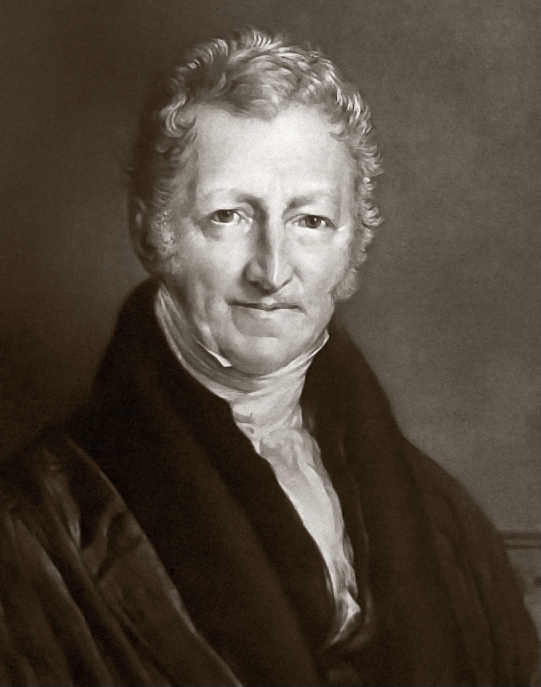
Thomas Malthus, rocking the mutton chops.
Source: Wikimedia Commons, Thomas Robert Malthus.
Defined by the FAO as
“A situation that exists when people lack secure access to sufficient amounts
of safe and nutritious food for normal growth and development and an active and
healthy life,” food insecurity is an issue which plagues people in all parts of
the world. There are many reasons for people to be suffering from food
insecurity; even in the more developed parts of the world, not everyone has the
income to keep themselves on the ‘secure’ side of that line. Sometimes the
problem is caused by supply and demand; like when the increasing popularity of
quinoa (keen-wah, say it with me) in the USA and the UK lead to the price of
the crop tripling, leaving the people of Bolivia and Peru who depended on it as
a main source of food unable to afford it. Yeah, your
super-duper-vegan-friendly-protein-packed quinoa and pesto dinner doesn’t look
so appetising anymore, does it? But supply and demand is the reality that we
live with, and it’s the reason we’re using so much of our land to produce food
that much of the world can’t even afford.
That’s not the only reason, of course. As the wise Bob Geldof has taught us, drought and famine are enemies that are not so easily fought off; and they often crop up in the parts of the world that are least equipped to deal with them. The global population is still rising, though not in the more economically developed world, so there are still more mouths to feed. As I’ve mentioned previously, we produce a lot more food than we consume; unfortunately, we just don’t get it to all of the people who need it.
Technological advances kept us clear of Malthus’s agrapocalypse, but unsustainable farming coupled with unequal economic situations, and famines and droughts caused by climate change, could be leading to a different kind. The technology needed to feed the global population is there, but the infrastructure to distribute the food and the wealth to distribute the machines are not. And therein lies the problem.
No one really needs
to go hungry, but they do because those of us with money drive the price up
beyond the reach of those without. We literally steal food from the hands of
communities that cannot afford to lose it. Technological advancement is, in
some ways, exponential; we can build bigger and better greenhouses, raise our
crops on nothing but water and sunlight, and take chickens from birth to
butcher in under a month, but all this intensifying of the agricultural process
costs money. So the better we get at it, the further behind we leave others.
The Industrial Revolution saved us from Malthus’s predictions, but in a cruel
irony it could become the reason for their eventual occurrence.
Subscribe to:
Posts (Atom)